



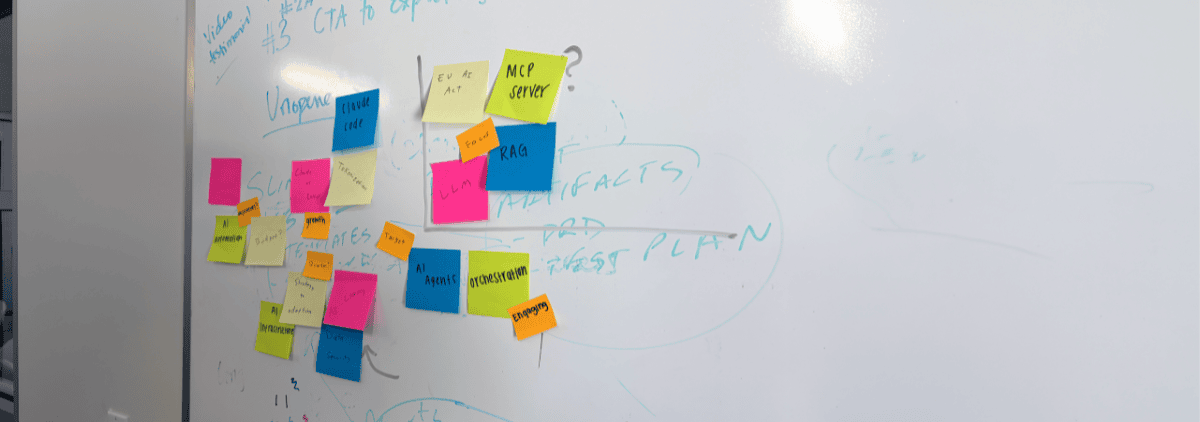
18 months ago, your team looked like it had AI figured out. They built clever demos, automated a few workflows, and impressed the room. Today, something feels off. Nothing has broken. Deadlines still land. Tickets still close. Yet you carry a quiet, nagging sense that the team has stopped moving.
AI has not only elevated what your team can achieve but also raised the bar for competence. What was once impressive has become the minimum standard, which is continuously increasing. A team that doesn’t evolve risks falling behind as others progress. This decline is often subtle, manifesting not as missed deadlines but through four signs that leaders may overlook. Here’s what to watch for and the costs of missing these signals.
Summary
The fix starts where most leaders least expect it: not with a new tool or a bigger budget, but with the people already pushing the edges of what AI can do. Recovery comes from empowering your curious explorers to map the cutting edge, then measuring honestly against where your team actually stands. The good news is that noticing the slide is most of the battle, and the gap is usually still small enough to close.
Sign 1: They Married the First Tool That Worked
The clearest warning sign is also the easiest to overlook: a team picks one tool, gets comfortable, and quietly stops looking around. The tool ages. The team doesn’t notice.
“When people commit to one specific AI platform and stop exploring other options that might fit their business better, that’s where we start to see folks become stagnant,” said Sarah Bhatia, Director of AI Product Innovation at Slingshot.
The pace of change makes this dangerous. The leading tool can change faster than most procurement cycles keep up. Chris Howard, Slingshot’s CIO, saw it firsthand at a recent industry event. “Last year, this whole room was on ChatGPT,” he said. “We ran a quick poll, and now almost everyone is on Claude.”
That shift matters for your business, not just your tech stack. The platform you standardized on a year ago may already sit a generation behind. If nobody on your team has questioned that choice in months, the setup that feels stable might quietly be aging out from under you. Loyalty to a single tool feels like discipline. More often, it signals that the curiosity has drained out of the room.
Sign 2: The Work Feels Suspiciously Easy
Most leaders treat smooth operations as a win; with AI, ease can mean the opposite. If working with these tools feels effortless, your team has probably settled into the shallow end.
Sarah compares AI work to a workout. “If you walk out of the gym feeling comfortable, you didn’t work hard enough, and you shouldn’t expect to make much progress. These tools work the same way.”
A team genuinely pushing the edge constantly runs into friction. They hit usage limits. They argue about which model handled a task better. They grumble when an update changes how something behaves.
Chris sees that tension as a healthy sign. “I talk about the real frustrations all the time, like the weekly limits or when one model screws something up that another model handles fine,” he said. “Those are the real challenges you run into when you lean on these tools every day.”
So pay attention to the opposite. When everyone speaks about AI in glowing, frictionless terms, that calm is rarely a sign of mastery. It usually means the team stopped reaching for anything hard enough to push back on.
Sign 3: They Talk About AI in the Past Tense
Pay attention to how your team talks about its AI work, because the language gives them away. A team that is still moving forward keeps pointing ahead, toward the next thing worth trying. A team that has stalled speaks with a quiet sense that the real work is already behind them.
“If a team starts talking about AI in the past tense, as if they rolled it out and the job is done, that’s a red flag for me,” Sarah said. “That cultural shift away from constantly learning and exploring is exactly the wrong move.” The trouble is that AI keeps moving whether your team does or not. What appeared fully rolled out months ago is now just the starting line, so a team that labels it ‘done’ is choosing to stand still while your competitor progresses.
Watch your most interested people closely, because they disengage first. “When your curious people stop tinkering and poking at new tools, that’s when the decline starts,” Sarah said. The early adopters are your canaries. The day they stop experimenting, the energy has already left the room.
Chris looks for the same drift in something more concrete: attendance. Slingshot runs an internal AI meetup every week. “When you start to see people fall off from those meetings, that’s a pretty obvious sign of fatigue,” he said. A thinning room isn’t a scheduling problem; it’s a signal.
Sign 4: A Quiet Divide Opens Between Your Best People and Everyone Else
This is the sign that costs you the most, and the one that’s hardest to spot from the corner office. From up there, a stalling team still looks productive. Tickets close, work ships, and everyone stays busy. What that view hides is the difference between the people genuinely pushing the work forward and the people simply keeping pace.
“You start to see a real divide between the power users and everybody else,” Sarah said. The trap is mistaking activity for progress. People can use AI every single day and still go nowhere new. “If nobody is questioning the model you use or trying different tools, you aren’t keeping pace,” she said. “Using it for your basic tasks is the expectation now. Getting ahead means putting in the hours to research what the next thing is and how it applies to your business.”
The real cost of that divide is human. Your sharpest people notice when the organization stops advancing, and they don’t wait around. The people racing ahead get bored when no one keeps pace with them, and that boredom hardens into a quiet conviction that they’ve outgrown the room.
Chris has watched the same frustration build. “If you’re a leader who sees all this opportunity and the people around you aren’t engaged, you get frustrated,” he said. “And the reality is your AI champions will start looking for an organization that fits their expectations better.” Your best employees are the easiest to lose and the hardest to replace.
What This Quiet Stall Is Actually Costing You
The reason these signs slip past good leaders is simple: the damage stays hidden until it becomes a crisis. You won’t see the gap in a status report; you’ll only notice it the day you lose to someone faster.
“These tools are so impactful that you might feel like you’re ten times more productive than you were a year ago, and that feels great,” Sarah said. “But if your competitor has figured out closed-loop, lights-out development and now moves a hundred times faster, that shows up the moment you compete for the same business.”
Chris spelled out where the bill lands. “You lose productivity, you start pricing yourself out of deals, and before long, you’re losing some of your best talent too,” he said. Slower delivery, higher relative cost, and quiet attrition rarely arrive as separate problems. They arrive together, and usually all at once.
The clock matters here, too. “The whole landscape changes completely every three months,” Sarah said. Miss a few of those windows in a row, and the gap stops being something you can close with a weekend of effort.
The Good News: You Probably Caught It in Time
If you recognized your team in any of these signs, don’t panic. In most cases, the hard part is noticing, and you already did it.
Chris said “Identify the people in your organization who are already on board, and empower them.” He is blunt about where recovery starts. “The most important thing is the leader who recognizes it, and then actually does something about it.”
You don’t need to understand every model yourself. You need to lean on the people who already do. “Check in with your curious group, your explorers, and your tinkerers to understand the cutting edge you should be operating at,” Sarah said. “Then compare honestly against where you actually are.”
That honesty is what separates the teams that recover from the ones that keep sliding. They stay curious, keep an eye on where the field is moving, and are willing to be critical of their own position rather than assuming they’re fine. And they make peace with the difficulty.
The Bottom Line
This kind of slide rarely looks like one. It shows up in teams locked into a single tool, coasting on easy wins, treating AI as finished, and quietly split between the few who push and the many who don’t. None of those signs triggers an alarm, which is exactly what makes them so costly. Each one drains your speed, your margin, and your best people while you’re looking the other way.
So take an honest look now, while the gap is still small enough to close. The teams that win the next quarter aren’t the ones most comfortable with AI. They’re the ones still a little frustrated by it.
If your team has stopped struggling, that’s not a sign you’ve arrived; it’s a sign you stopped climbing.

Written by: Whitney Powell
Whitney earned her degree in Marketing and Management from the University of Kentucky and discovered her passion for marketing and events. Her go-getter attitude, willingness to learn, and problem-solving abilities elevate the Slingshot team. Known as a daredevil, Whitney loves trying new things and embracing challenges, whether traveling to new places or taking on new projects at work.

Edited by: Savannah Cherry
Savannah leads marketing and new business at Slingshot. She writes, posts, and creates all things Slingshot, and helps companies navigate working with a tech partner for the first time. While she isn’t developing software, her CIS minor and a tendency to tinker with AI tools to streamline her own work keep her up to speed on the team’s work. She co-organizes and hosts the Louisville AI Exchange, and she can’t rest until all her work is done.

Expert: Chris Howard
Chris has been in the technology space for over 20 years, including being Slingshot’s CIO since 2017. He specializes in lean UX design, technology leadership, and new tech with a focus on AI. He’s currently involved in several AI-focused projects within Slingshot.

Expert: Sarah Bhatia
Sarah Bhatia brings people together. In her decade plus of product and product-adjacent experience, her focus has been on cross-functional collaboration, asking lots of questions, and getting big results. She excels at strategy development, and getting the right brains in the room to solve big problems. Sarah would describe herself as a daredevil, because she’s not afraid to ask “dumb“ questions, get smart answers, and take (calculated) risks.
Frequently Asked Questions
The decline is usually quiet rather than obvious. Watch for four patterns: a team that locks onto one tool and stops exploring alternatives, work that feels suspiciously easy with no friction, people who talk about AI in the past tense as if the rollout is finished, and a widening gap between a few power users and everyone else. None of these trips an alarm, which is exactly what makes them costly.
The leading tools change faster than most procurement cycles can keep up with. A platform you standardized on a year ago may already sit a generation behind. When a team stops questioning whether its tool is still the right fit, loyalty starts to look like discipline but usually signals that curiosity has drained out of the room.
Often the opposite. Ease tends to mean a team has settled into the shallow end. A group genuinely pushing the edge runs into constant friction: usage limits, debates over which model performed better, and frustration when an update changes how something behaves. When everyone describes AI in glowing, frictionless terms, that calm rarely reflects mastery.
The damage stays hidden until it becomes a crisis. You lose productivity, start pricing yourself out of deals, and begin losing your best talent, and those problems usually arrive together. Your sharpest people notice when the organization stops advancing, and AI champions often start looking for an employer that matches their pace. The landscape shifts roughly every three months, so missing a few windows in a row turns a small gap into one you can no longer close easily.
The hard part is noticing, and recognizing the signs means you likely caught it in time. Recovery starts with the leader who sees it and acts. Identify the people already on board and empower them, then lean on your curious explorers and tinkerers to understand the cutting edge you should be operating at. Compare that honestly against where the team actually is. You do not need to master every model yourself, just the willingness to stay critical of your own position.