



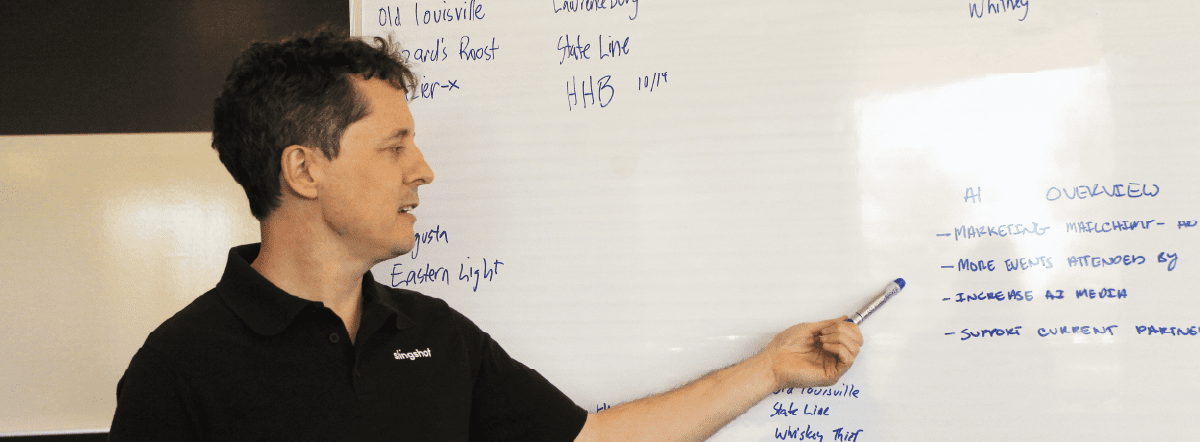
What happens after a CEO says, ‘Let’s do more with AI?’ Usually and unfortunately, not much.
And it’s not because your team lacks motivation. It’s because that spark rarely comes with a map. Without clear direction, AI efforts stall in slow, invisible friction.
Why? Because AI isn’t just a new tool. It’s a shift in how your business works. It cuts across roles, processes, and expectations. And the real blockers? They’re often the ones you don’t see coming.
Let’s break down the hidden barriers slowing your AI progress and what to do instead.
Summary
AI momentum often stalls not because teams lack ambition, but because the real obstacles stay hidden. From unclear direction and shallow tool adoption to data constraints, skills gaps, siloed structures, and unspoken fear, these barriers quietly drain progress. Leaders who treat AI as an operating shift, not a plug-in, can cut through the friction and turn experimentation into lasting advantage.
The Motivation-Execution Gap
The most common misconception CEOs make when they declare an AI initiative? That motivation is enough.
“Whenever CEOs are saying, ‘we should be doing more AI,’ usually they’re not facing a motivation problem,” said Sarah Bhatia, Director of AI Product Innovation at Slingshot. “They start to face an execution problem due to misunderstandings of where to start. Step one is overwhelming.”
That overwhelm can trigger analysis paralysis. What tool do we use? Where do we integrate it? How do we know it’s working? The excitement wears off quickly when leaders realize AI isn’t plug-and-play; it’s a mindset shift, a workflow change, and a long-term investment all at once.
Chris Howard, CIO of Slingshot, agreed: “To get started with AI, you need a couple of people who are willing to get out there and explore, and be willing to fail. Initially, it’s both a learning experience and an investment.”
The first barrier to AI isn’t technical; it’s directional. You need a pilot group with permission to explore, fail, and iterate. And a clear commitment from leadership that learning is part of the ROI.
Mistaking AI for a Tool Instead of a System
Another barrier shows up in how leaders think about AI. It’s still often seen as a plug-in: a tool to bolt onto business as usual. But that mindset leads to shallow adoption and disappointing results.
“AI is not just a purchase or a subscription,” Sarah explained. “It really is a workflow transformation.” Without understanding that, organizations default to surface-level adoption.

True AI adoption is more than turning on Microsoft Copilot or dropping ChatGPT into a workflow and hoping for magic. Without ownership, process design, and use case clarity, these tools become noise, not impact.
Chris broke it down: “If you could incorporate AI into your development teams and see a 10% to 20% boost in productivity, that’s a win. But it takes time to learn what’s possible, what makes the most sense, and to identify the right people to push it.”
Set realistic expectations. Start with one meaningful business problem, not the shiniest tool. Then build a system around it with the right processes, owners, and measurable outcomes. That’s where the real impact starts.
When Data and Governance Hold You Back
Even with the right tools and mindset, AI efforts can stall if your data or your governance structure isn’t ready to support it. That foundation starts with data: how it’s structured, who owns it, and whether it’s safe to use.
It’s easy to get caught up in workflows and experimentation, but without the right guardrails, progress quickly hits a wall. Chris put it plainly: “There’s probably some regulatory compliance stuff in there, too. You can’t just take any application and send it to ChatGPT. A lot of what we deal with at Slingshot involves intellectual property.”
Data readiness isn’t just about structure and hygiene. It’s about governance. Who controls the data? Where does it live? Can it be used responsibly and securely with AI?
And even when your data is technically clean, a lack of clarity around decision-making can create major bottlenecks. Sarah shared: “You need some clarity around who’s making the rules so that you’re not just creating red tape.”
Clean data matters, but so does clean governance. Before scaling AI, get intentional about ownership, access, compliance, and decision rights. If those pieces aren’t in place, even the best tools won’t get you far.
The AI Skills Gap You Can’t Ignore
Even highly capable teams can struggle with AI adoption if there’s a skills gap. Excitement doesn’t equal readiness, and that difference matters.
“There is such a wide gap in abilities,” Sarah noted. “There’s a gap around what AI is, and another gap around how to apply it. Even evaluating tools is a skill set.”
Slingshot’s AI Bootcamps often expose this gap firsthand: some participants are experimenting for fun, while others struggle to understand the basics. That imbalance leads to misalignment across teams and slows adoption.
Chris added that constant change makes this harder: “All of these tools are constantly evolving. Once you feel like you’ve figured it out, they change on you.”
Investing in training isn’t a nice-to-have; it’s a necessity. And it’s not just about tools. Teach people how to think about AI, not just how to use it.
Org Charts Were Built to Block This
The way your organization is structured may quietly be slowing things down. Traditional org charts are designed around functions and silos, but AI doesn’t follow those lines. “Org charts naturally are silo creators,” said Sarah. “But AI cuts across all those silos.”
AI doesn’t sit neatly within one department. It touches HR, operations, sales, product, customer service, and beyond. That wide reach can create confusion, competing priorities, and slow decision-making.
To overcome that, leaders need to step in. Chris explained: “You have to carve out time, free people up from what they’re doing, even if it’s painful. That commitment has to come from leadership.”
![To overcome [AI barriers], leaders need to step in. You have to carve out time, free people up from what they’re doing, even if it’s painful. That commitment has to come from leadership.](https://b2168432.assetcdn.net/2.0/2168432/wp-content/uploads/2026/02/6-Hidden-Barriers-Slowing-Down-AI-in-Your-Business-1.png?lossy=2&strip=1&webp=1)
AI doesn’t respect silos. And if your structure isn’t built for flexibility, it will get in the way. You’ll need visible champions, true cross-functional collaboration, and in some cases, a shift in how your teams are organized to unlock the full potential.
How Fear Quietly Derails AI Progress
Not all barriers are technical. Some of the biggest threats to AI adoption are emotional: fear, hesitation, and uncertainty. And they often go unspoken.
Even after a company decides to pursue AI, resistance can quietly stall progress. The concerns are usually valid: data privacy, job security, or just not knowing how to keep up with the pace of change. But left unaddressed, those concerns become hesitation. And hesitation turns into inertia.
“Fear could halt your AI initiative entirely,” Chris said. “It’s easy to say, ‘I don’t have time’ or ‘I’m too busy.’ But if you don’t have a strategy, your competitors will.”
Sarah added: “AI is becoming the operating baseline. If you’re waiting too long, you’re losing time, and your back will eventually be up against the wall.”
Fear doesn’t just slow down adoption; it creates uncertainty about the future of work itself. As AI reshapes workflows, many roles begin to shift. If the structure stays frozen, even your most engaged employees may start to feel misaligned.
“We’ve had people outgrow their job titles because of AI,” Chris said. “If you don’t align roles and responsibilities with the new reality, you risk staling culturally.”
Fear is normal. But without leadership to address it through strategy and structure, it becomes a barrier that’s hard to recover from.
What CEOs Need to Hear (But Rarely Do)
If you’re a CEO thinking about AI, here’s what your team probably won’t say out loud, but should:
“Don’t treat AI like a single tool you’re adopting,” said Sarah. “Treat it like a full operating shift. Start with one business problem that brings value, assign ownership, find champions, and then scale from there.”
Chris put it this way: “Don’t aim for perfection. It requires investment. Have realistic expectations, especially early on.”
AI isn’t a one-time investment. It’s a strategic evolution. Start small, align around real business value, and build momentum with clarity and curiosity.
More on Getting Your Team AI Ready

Written by: Savannah Cherry
Savannah is our one-woman marketing department. She posts, writes, and creates all things Slingshot. While she may not be making software for you, she does have a minor in Computer Information Systems. We’d call her the opposite of a procrastinator: she can’t rest until all her work is done. She loves playing her switch and meal-prepping.

Expert: Chris Howard
Chris has been in the technology space for over 20 years, including being Slingshot’s CIO since 2017. He specializes in lean UX design, technology leadership, and new tech with a focus on AI. He’s currently involved in several AI-focused projects within Slingshot.

Expert: Sarah Bhatia
Sarah Bhatia brings people together. In her decade plus of product and product-adjacent experience, her focus has been on cross-functional collaboration, asking lots of questions, and getting big results. She excels at strategy development, and getting the right brains in the room to solve big problems. Sarah would describe herself as a daredevil, because she’s not afraid to ask “dumb“ questions, get smart answers, and take (calculated) risks.
Frequently Asked Questions
Most AI initiatives stall because approval is not paired with clear direction. Teams are motivated but lack clarity on where to start, which use cases matter, and how success will be measured. Without ownership, guardrails, and permission to experiment, momentum fades quickly.
AI is not just a tool you plug into existing workflows. It is a system-level shift that changes how work gets done across roles and functions. Treating AI like a simple software purchase often leads to shallow adoption and limited business impact.
AI depends on accessible, well-governed data. When ownership is unclear or compliance rules are undefined, teams hesitate to move forward. Without clear guardrails around data usage, security, and decision rights, AI efforts tend to stall before they can scale.
Many teams struggle not just with using AI tools, but with understanding what AI is capable of and how to apply it to real business problems. The rapid pace of change makes this harder, turning AI literacy and ongoing training into a critical requirement rather than a nice-to-have.
Traditional org structures create silos, while AI cuts across them. At the same time, fear around job impact, data risk, or moving too fast can quietly slow adoption. Without visible leadership support and cross-functional collaboration, hesitation turns into inertia.